Showing posts with label island. Show all posts

17 January, 2014

Don't Ever Change


The tiny colonial seaside port town of Paraty (say: pah-rah-CHEE) has seen many incarnations since it was first settled in the 1500's.  Since then, this modest town has played part in the import of miners and export of gold from the adjacent state of Minas Gerais and then for coffee after that.  Each industry eventually ended their mutual relationship with the port after the development of roads from other coastal locales such as Rio de Janeiro or São Paulo, which proved to be time-saving in terms of travel.

Consisting mostly of one or two-story white-washed colonial-era buildings with brightly colored doors and windows, Paraty is an easy place to get lost in.  Not physically, since it spans only a handful of blocks in any given direction, but mentally, as any visitor is easily transported to a simpler time.  It is not difficult to imagine horses clomping down the cobble-stoned streets, now off-limits to cars.  (And these cobble-stones are not small; it behooves pedestrians to keep one eye on their next step at all times.)

For a small town, it is strange to find so many churches scattered throughout its historic center.  Though small, and all Catholic, it turns out each was intended for different congregants: one for wealthy whites (built in 1800), one for slaves (1725), and another (1722) for mulattos - children of mixed race, but not necessarily slaves.

Before numeric addresses, most postage was directed to a street name and
door color, making it preferable to not have repeated colors on the same block.

The bay of Paraty is dotted with many small islands leading out to the open Atlantic Ocean.  We boarded a schooner for an afternoon of island hopping and enjoying the unique and majestic views of this region's coastline, known as the Mata Atlantica, a geographic and ecologic region with characteristics unique only to here (which I've had the pleasure to visit twice before whilst in Ubatuba and Ilha Grande).

Afternoon on the schooner Moana, touring the Bay of Paraty.

The beaches in Paraty are nothing to write home about, however, those of the islands in the bay, as well as several a short drive to the south are among the best in Brazil.  We ventured to the community of Trinidade, an old fishing village now filled with pousadas, restaurants, and hostels, to settle on Praia Meio for an afternoon.

Excuse the duck-face and douche-y peace sign - too much sun and
beautiful scenery make me a wannabe a surfer-bro.

It was a great decision that Brazil made Paraty a National Historic Site back in the 1960's, thus preserving its character for that niche group of tourists who want some sun and sand with a lot of timeless charm.


30 May, 2013

More Than Fun To Say

I admittedly have not gotten to travel much during the last ten months living in Brazil, something I hope to remedy in the next year.  Regardless, sometimes I am forced to travel, such as on class field trips!

The 7th grade class trip this year ventured to the northern coast of São Paulo state to town of Ubatuba.  About four hours away from Campinas by bus, this place must rank near the top of lists of places that are fun to say, such as Walla Walla, Djibouti, and Sheboygan.  A vacation hot-spot during the summer months, it is often nicknamed "Ubachuva" (chuva is "rain" in Portuguese) during the off-season.   Fortunately, we were blessed with very little precipitation during our three days learning about this region.


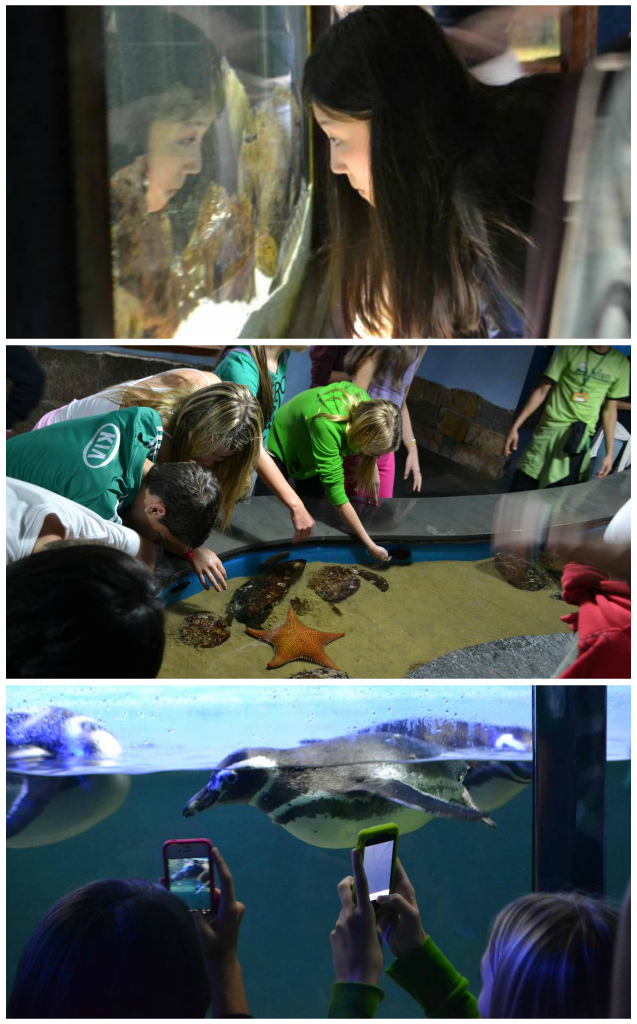
First up was a stop at Ubatuba's aquarium.  Modest in size but of good quality, the aquarium showcased the diversity in marine life in and around Brazil.  Also, there were penguins, which are not endemic, however, who is going to complain about seeing penguins?!?


The marine area around Ubatuba lays claim to being the seasonable home to four out of the five sea turtles found along Brazil's coast.  Thus, with good reason, the Projeto Tamar, a research and rehabilitation center for sea turtles, in located here.


On the second day we hopped on a boat and headed across the water to one of the many islands that speckle this part of the coastline.  Ilha Anchieta - now a State Park - was once a prison that is famous for a (almost) successful mass escape attempt.  (Side note: since I've been in this country, I have now visited a total of three shuttered prisons, two on islands.)

Sometime during the mid-1900's, the prisoners devised a plan to earn the guards' trust by essential being really, really well-behaved.  It took two years, but they eventually got to a point where they were essentially seen as a non-threat.  The prisoners, now trusted companions to the guards, waited for the day the scheduled supply boat would come to the island to turn on the guards.  They killed who they needed to then went to the dock to wait, but the ship was late due to unfriendly seas, leading the prisoners to get nervous and restless, ending with what amounted to a bloody massacre amongst themselves on the beach.  When the supply ship arrived, the prisoners who were left boarded and subsequently crashed/sank/overturned near the mainland, thus drowning most of those remaining.


Even though the island is only about 500m away from the mainland at its narrowest point, the guards had convinced the inmates that the waters were infested with sharks by occasionally placing shark skeletons and skulls on the beach as "proof." Due mostly to the embarrassment of the escape incident itself, along with the damage incurred from the beach riot, which also involved setting fire to many of the buildings, the prison was immediately and permanently shut down.

Listening to the history of the prison.
Now a protected State Park, the island is a unique preserved example of a unique ecosystem, the Mata Atlântica (Altantic Tropical Forest), that once covered much of the Brazilian coast and is now mostly limited to the stretch between Rio de Janeiro and just north of the city of São Paulo.  A few hours of hiking the island's trails, visiting a few beaches, snorkeling, and poking around in the tide pools, we were all exhausted and ready to head back to the boat.

Island flora and fauna: flower (top), vulture tracks on the beach (middle),
and Spanish moss dangling from a tree (bottom).
This is a beautiful area of the country - rich in nature, culture, and history.  I hope to be able to return in the near future to explore more of this coast, including Ilhabela and Paraty, perhaps with a little more beach beach time and a little less chaperoning!

Looking down the dock toward the mainland from Ilha Anchieta.

20 November, 2012

Big Island, Big Reward

The emerald-hued coast of Brazil between São Paulo and Rio de Janeiro can't be described as anything less than majestic.  The Atlantic seems to rise up to meet the brilliant green coastal slopes as they plunge into the sea.  This spectacular view is what we were greeted with every morning from our rainforest lodging on the hillside of Ilha Grande.


After hitching a ride to the historic sea-side town of Paraty, taking a couple hour bus ride to the small port-city of Angra dos Reis, followed by a 90-minute ferry ride, we finally arrived on the shores of Ilha Grande, the largest of a smattering of islands just off the coast of Brazil's mainland.

The village and bay of Abraão.  Mainland Brazil is in the distance.

Being awakened by parrots isn't such bad vacation wake-up call.

Making progress on my 52 in 52...

Breakfast of champions

Now-a-days Ilha Grande and its more than 70 scattered beaches is tourist mecca, filled during holidays and summer weekends with day-trippers from Rio, wandering hippie back-packers, surfers, and Argentines on a cruise-ship stop-over.  But that wasn't always the case.  Though never continually inhabited, even by indigenous populations, until the 1800's, the island has served many purposes in its short civilized history.

A short walk from the largest town, Vila do Abraão, one can find the ruins of Lazareto, a quarantine facility used for immigrants from Europe as a way to keep cholera from making landfall.  This same building was a used later for a number years as a jail before being imploded.  In some of the tinier inlets, small beach communities exist, as do the remnants of long-gone sardine canneries.  On the south side of the island, facing the open sea, in the town of Dois Rios, lie the remains of Brazil's Alcatraz, the Instituto Penal Cândido Mendes (IPCM).  The prison was active for roughly 100 years until it too was imploded in 1994 (notice a pattern here?).  Dois Rios also goes down in infamy as the home of a wealthy plantation owner who, from the relative isolation of his location, supported the continued trade of slaves well after its national prohibition.  Without the economic stability of illegal human trafficking and the jail, Dois Rios is a now sad shadow of its former self, albeit one with a gorgeous beach.

Praia Lopes Mendes - at around 3km long, this white-sand beach is touted
 as one of the most beautiful beaches in the country.

The remains of a window from the imploded jail at Dois Rios.

The Instituto Penal Cândido Mendes' outer wall.

The 200 year old aqueduct in the jungle used to bring water to the
quarantined immigrants just outside of present-day Abraão.

There are no true roads on Ilha Grande, save for the dirt one connecting Abraão and Dois Rios, and the only vehicles on the island are government related, so the only mode of transport from one site to another is by trail through the rainforest or water taxi along the shore.  Ilha Grande has found a balance; its tourist infrastructure is intact and healthy, but so is its ecology.  Whether you're looking for wildlife and rustic communing with nature, a candle-lit shrimp dinner on the beach, a look back in time, or a day of rowdy drinking surrounded by thong and speedo-clad revelers, Ilha Grande can deliver.  The reward is simply getting there!