Showing posts with label beach. Show all posts

19 June, 2015

Looking Back

My time here in Brazil has been many things: enriching and frustrating, inspiring and maddening. While there are things I will find in the future to look back fondly on, when my plane leaves the tarmac I will, in general, have little love lost.  That being said, as I reflect on the last three years of life and travel, I will focus on the positive experiences that may seduce travelers to choose Brazil as a place worthy of visiting.
1. Colonial Towns - Brazil has a fascinating history of European settlers from a variety of nations attempting to lay claim to a part of the new world. Thanks mostly to the Dutch and Portuguese, there are a number of colonial towns still in a good condition along Brazil's coastlines as well as inland due to early mining and agriculture. I've had the pleasure of visiting Paraty in the state of Rio de Janeiro, Olinda in the state of Pernambuco, and Ouro Preto in the state of Minas Gerais. Each takes you back in time as you navigate hazardous cobble-stoned streets and slow down to wonder what is was like as one of the first inhabitants of this continent.

The picturesque town of Paraty.
While neighboring Olinda gets a lot more tourists, the old town of Recife,
which dates to the same time period, is worth a visit as well.

2. Rio - This city was easily one of my favorites in all of Brazil. I can't explain it other that to say I love the carioca spirit!  If I had lived closer I would have been camped out at Posto 9 on Ipanema ever chance I got. Nevertheless, I did manage to visit four times in three years, a couple of those for a week!  My advice for travelers: come once to do the touristy stuff - Pão de Açúcar, Christ the Redeemer (or skip this...ugh!), the Centro/Lapa district and Selaron Steps, and the Botanical Gardens - then come back again and beach until you can no longer beach.

Rio at Carnaval is just as spectacular as you would hope.
The energy of dancing until sunrise in the Sambadrome is contagious!

One of my favorite places in Rio, other than the beaches,
and a must-see for any tourist - the Botanical Gardens.
Ipanema beach at sunset...sigh

Paçoquita is a popular brand of paçoca.
(Photo source)
3. Paçoca - You know the inside of a Reese's Peanut Butter Cup?  It's that but without the chocolate and more peanutty-tasting. The bakery near my apartment, Riviera, sells homemade versions which are delicious and not as sweet.
I love these plain or as a topping on açai. Speaking of...

4. Açaí - This "super food" is pretty pricey outside of Brazil, but in the country it is easy to find and worth the cost. Made from a berry, and served frozen with guaraná mixed in, it is delicious on the beach with bananas, granola, and paçoca...or basically whatever you want: strawberries, condensed milk, chocolate syrup, honey, etc. They may eat it at health-food shops in L.A., but it Brazil it is treated like ice cream. I have no problem with that.

This delicious monstrosity from a trip to Guarujá is topped
with papaya, granola, condensed milk, and banana.

5. Inhotim - This massive outdoor sculpture garden slash installation museum located in the middle of nowhere in Minas Gerais about an hour from Belo Horizante is a must see. If you "don't get" contemporary or modern art, Inhotim just might change your mind, but be prepared for sore feet and a sensory overload by the end of the day because you are part of the art here. Not to mention all of this takes place in what amounts to a gorgeous botanical garden.  I don't know why this place isn't a bigger deal!

"Invenção da cor"
by Brazilian artist Hélio Oiticica.
"Narcissus Garden"
by Japanese artist Yayoi Kusama.


6. Oscar Niemeyer - The architect of the UN Building in New York, Niemeyer's designs are all over Brazil, especially dominating Brasília, which he helped plan from the ground up. A proud communist who did not believe in private ownership of the earth, one common thread of his work is that all ground floors are open to the public, many literally so. Niemeyer also does things with concrete that seem to defy gravity.

Brasilia's Museu Nacional H. Guimarães with the National Cathedral
in the background, all designed by Niemeyer.
Niemeyer has several works in São Paulo's Memorial da América Latina,
including the Salão de Atos building.

7. A praia - Brazil knows how to do beaches. Whether in Rio, Recife, Ubatuba, or Guarujá, you find a spot, rent a few chairs, an umbrella, spread out your canga, and wait for the cerveja and açai vendors to stroll by. It's that simple. Don't forget your sunga!

Praia Trindade between Ubatuba and Paraty.

In preparing for my next adventure in Malaysia I received a preemptive email from the shipping company several months ago cautioning about the complications Brazilian customs often inflict. To quote: "As you are aware, Brazil is a very different and peculiar country when it comes to customs and other related formalities."

"Different and peculiar."

I think I'll just let this blog end with that...

25 January, 2015

M.I.A.

It may appear that I've abandoned this blog.  Or Brazil. Or travel in general.

And I have, sort of. In a way, Brazil and my desire to explore it, has lost a bit of its allure. It's no one's fault, really; it just is what it is.

A beach weekend in Guarujá
I haven't been sitting on my caboose since September - my last bloggable, noteworthy travel adventure. I've weekended on a nice beach in Guarujá, on the São Paulo coast. I've spent a lovely four days in Rio, experiencing it without the New Years, Carnaval, and World Cup crowds; though I didn't do anything I hadn't done before and that was perfectly fine!

The fact is, Brazil is expensive: sometimes unnecessarily, unjustifiably, obscenely so. And unlike many other Latin American countries where one can show up at a bus terminal, look at a schedule, and go, Brazil's buses are often booked and the route options limited.  People who can afford to fly, tend to fly, and those who can't, plan ahead and bus it.  Or they don't go anyplace at all.  Because Brazil is huge.  Sometimes busing is foolish to begin with just because of the sheer size of the country.

Açai on Ipanema Beach in Rio
And then there are the holidays.  Brazil has a decent amount of holidays and when those holidays hit, it seems everyone who can, travels. Most of them to the beach, which makes the roads to said beaches and the airports veritable mosh-pits of vacationers. And then we come full-circle to the hotel/hostel/pousada operators jacking up their rates.

All that being said, I think I have essentially breathed a deep, concessionary sigh and allowed myself to forget about where I live and just trudge forward until June when I leave this country for good. Three-day holiday weekends are just too short to fork over enough reais to pay a month's rent in the US, to fly someone interesting and different, stay in lodging with "high-season" rates, only to turn around after just catching your breath.

Nothing better than days with no schedule, friends, beach cerjevas and Rio

There may be a post here or there about explorations in São Paulo down the highway, for a city of 22 million does, by default, offer many interesting things to do and see. But I have no major travel plans for the next five months already mapped out.

Not everyone who has lived and/or traveled in Brazil will agree with me on any or all of the above, however, I can confidently say that I have lost my vontage for travel in Brazil.  And that is that!

Last two photos courtesy of Lisa Jensen-Hengstler.

03 July, 2014

Third Time's The Charm


Actually, with Rio de Janeiro, it's always a charm. I love this city.

I'm a glutton for punishment: I always seem to hit Rio when it's at its busiest.  I've celebrated New Years on the beach with a million of my closest friends and danced samba until dawn during Carnaval. Why not come back during the World Cup?!?

Playing tour guide a bit, we visited some of my favorite places - the Botanical Gardens, Posto 9, and Cinelândia - plus some new ones, such as the Urca neighborhood and the Selarón Steps.  I now feel well-versed in navigating the subway as well and the city buses.  Some day I'll return at a non-peak time and wonder where everyone is!


The Botanical Gardens are a place I doubt I will grow tired of visiting.

I came across the globe-trotting Buddy Bears on my run from Copacabana
to Leme Beach one morning.

Soccer on Copacabana Beach

Pão de Açúcar under a cloud.

Watching the sun set from the Urca neighborhood.

The Escardaria Selarón (Selarón Steps) are a completely tiled pedestrian
way in the Santa Teresa neighborhood created by Chilean artist and
Rio transplant Jorge Selarón.
Since his suspicious death in January of 2013, the steps have only gained
tourist attention and have become a recognizable Rio landmark.
The first tiles Selarón scavenged in abandoned construction sites, but as the
project gained publicity, tiles were donated from around the world.
In 2003, Snoop Dogg and Pharrell used the steps as a scene in the video
for their hit "Beautiful".  The steps have been added to significantly since.
I'm attempting the channel my inner Pharrell.
Rio Scenarium is a cool bar/restaurant in Centro with three floors and live
music nearly every night of the week.  
First Botanical Graden photo taken by Alissa Monfre.
Pão de Açúcar photo taken by Dan Monfre.

24 June, 2014

City of Reefs

The city of Recife (pronounced "heh-see-fee") is located in the most eastern Brazilian state of Pernambuco, and gets its name from the plentitude of reefs off the coast.  This both makes the sea here more calm, but also attracts a lot of sharks.  Originally a Portuguese settlement in the 1530's, it was captured by the Dutch and grew under their control during the mid-1600's, at one point serving as the capital of Dutch Brazil. Today, Recife is the 5th largest Brazilian city with just under 4 million inhabitants.

While the majority of the city in not a tourist destination, it is a good jumping off point to visit nearby Olinda, hang out on the beach of the Boa Viagem neighborhood, and take a stroll through Recife Antigo (Old Recife) to admire the architecture and imagine traveling back in time.

A colorfully decorated street in Old Recife.

Brazilian fans on their way to the FIFA Fan Fest area, located (poorly) on one
of the narrow streets along the water in Old Recife.

Many buildings in Recife Antigo date back to the 1600's.

Fans watching the Brazil vs Chile match overflow from a bar into the street.

Monument by artist Francisco Brennand in Recife's
Parque das Esculturas. 

Praia Boa Viagem on a nearly cloudless afternoon.

What could make a beach day better?  Grilled cheese on a stick, of course!

Photo of the Francisco Brennand monument taken by Dan Monfre.

17 January, 2014

Don't Ever Change


The tiny colonial seaside port town of Paraty (say: pah-rah-CHEE) has seen many incarnations since it was first settled in the 1500's.  Since then, this modest town has played part in the import of miners and export of gold from the adjacent state of Minas Gerais and then for coffee after that.  Each industry eventually ended their mutual relationship with the port after the development of roads from other coastal locales such as Rio de Janeiro or São Paulo, which proved to be time-saving in terms of travel.

Consisting mostly of one or two-story white-washed colonial-era buildings with brightly colored doors and windows, Paraty is an easy place to get lost in.  Not physically, since it spans only a handful of blocks in any given direction, but mentally, as any visitor is easily transported to a simpler time.  It is not difficult to imagine horses clomping down the cobble-stoned streets, now off-limits to cars.  (And these cobble-stones are not small; it behooves pedestrians to keep one eye on their next step at all times.)

For a small town, it is strange to find so many churches scattered throughout its historic center.  Though small, and all Catholic, it turns out each was intended for different congregants: one for wealthy whites (built in 1800), one for slaves (1725), and another (1722) for mulattos - children of mixed race, but not necessarily slaves.

Before numeric addresses, most postage was directed to a street name and
door color, making it preferable to not have repeated colors on the same block.

The bay of Paraty is dotted with many small islands leading out to the open Atlantic Ocean.  We boarded a schooner for an afternoon of island hopping and enjoying the unique and majestic views of this region's coastline, known as the Mata Atlantica, a geographic and ecologic region with characteristics unique only to here (which I've had the pleasure to visit twice before whilst in Ubatuba and Ilha Grande).

Afternoon on the schooner Moana, touring the Bay of Paraty.

The beaches in Paraty are nothing to write home about, however, those of the islands in the bay, as well as several a short drive to the south are among the best in Brazil.  We ventured to the community of Trinidade, an old fishing village now filled with pousadas, restaurants, and hostels, to settle on Praia Meio for an afternoon.

Excuse the duck-face and douche-y peace sign - too much sun and
beautiful scenery make me a wannabe a surfer-bro.

It was a great decision that Brazil made Paraty a National Historic Site back in the 1960's, thus preserving its character for that niche group of tourists who want some sun and sand with a lot of timeless charm.


30 May, 2013

More Than Fun To Say

I admittedly have not gotten to travel much during the last ten months living in Brazil, something I hope to remedy in the next year.  Regardless, sometimes I am forced to travel, such as on class field trips!

The 7th grade class trip this year ventured to the northern coast of São Paulo state to town of Ubatuba.  About four hours away from Campinas by bus, this place must rank near the top of lists of places that are fun to say, such as Walla Walla, Djibouti, and Sheboygan.  A vacation hot-spot during the summer months, it is often nicknamed "Ubachuva" (chuva is "rain" in Portuguese) during the off-season.   Fortunately, we were blessed with very little precipitation during our three days learning about this region.


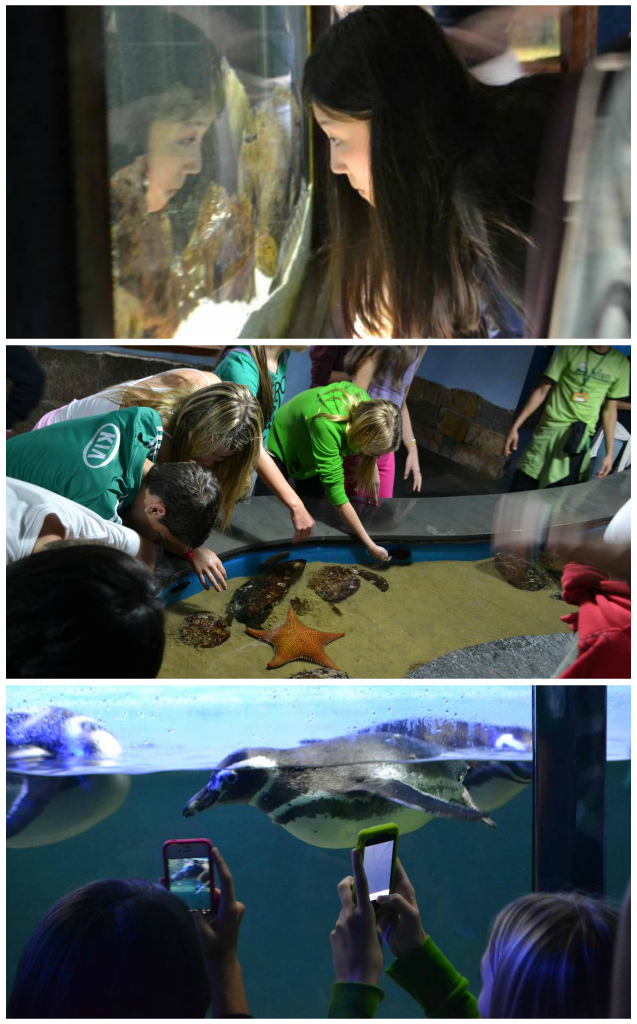
First up was a stop at Ubatuba's aquarium.  Modest in size but of good quality, the aquarium showcased the diversity in marine life in and around Brazil.  Also, there were penguins, which are not endemic, however, who is going to complain about seeing penguins?!?


The marine area around Ubatuba lays claim to being the seasonable home to four out of the five sea turtles found along Brazil's coast.  Thus, with good reason, the Projeto Tamar, a research and rehabilitation center for sea turtles, in located here.


On the second day we hopped on a boat and headed across the water to one of the many islands that speckle this part of the coastline.  Ilha Anchieta - now a State Park - was once a prison that is famous for a (almost) successful mass escape attempt.  (Side note: since I've been in this country, I have now visited a total of three shuttered prisons, two on islands.)

Sometime during the mid-1900's, the prisoners devised a plan to earn the guards' trust by essential being really, really well-behaved.  It took two years, but they eventually got to a point where they were essentially seen as a non-threat.  The prisoners, now trusted companions to the guards, waited for the day the scheduled supply boat would come to the island to turn on the guards.  They killed who they needed to then went to the dock to wait, but the ship was late due to unfriendly seas, leading the prisoners to get nervous and restless, ending with what amounted to a bloody massacre amongst themselves on the beach.  When the supply ship arrived, the prisoners who were left boarded and subsequently crashed/sank/overturned near the mainland, thus drowning most of those remaining.


Even though the island is only about 500m away from the mainland at its narrowest point, the guards had convinced the inmates that the waters were infested with sharks by occasionally placing shark skeletons and skulls on the beach as "proof." Due mostly to the embarrassment of the escape incident itself, along with the damage incurred from the beach riot, which also involved setting fire to many of the buildings, the prison was immediately and permanently shut down.

Listening to the history of the prison.
Now a protected State Park, the island is a unique preserved example of a unique ecosystem, the Mata Atlântica (Altantic Tropical Forest), that once covered much of the Brazilian coast and is now mostly limited to the stretch between Rio de Janeiro and just north of the city of São Paulo.  A few hours of hiking the island's trails, visiting a few beaches, snorkeling, and poking around in the tide pools, we were all exhausted and ready to head back to the boat.

Island flora and fauna: flower (top), vulture tracks on the beach (middle),
and Spanish moss dangling from a tree (bottom).
This is a beautiful area of the country - rich in nature, culture, and history.  I hope to be able to return in the near future to explore more of this coast, including Ilhabela and Paraty, perhaps with a little more beach beach time and a little less chaperoning!

Looking down the dock toward the mainland from Ilha Anchieta.