I admittedly have not gotten to travel much during the last ten months living in Brazil, something I hope to remedy in the next year. Regardless, sometimes I am forced to travel, such as on class field trips!
The 7th grade class trip this year ventured to the northern coast of São Paulo state to town of Ubatuba. About four hours away from Campinas by bus, this place must rank near the top of lists of places that are fun to say, such as Walla Walla, Djibouti, and Sheboygan. A vacation hot-spot during the summer months, it is often nicknamed "Ubachuva" (
chuva is "rain" in Portuguese) during the off-season. Fortunately, we were blessed with very little precipitation during our three days learning about this region.
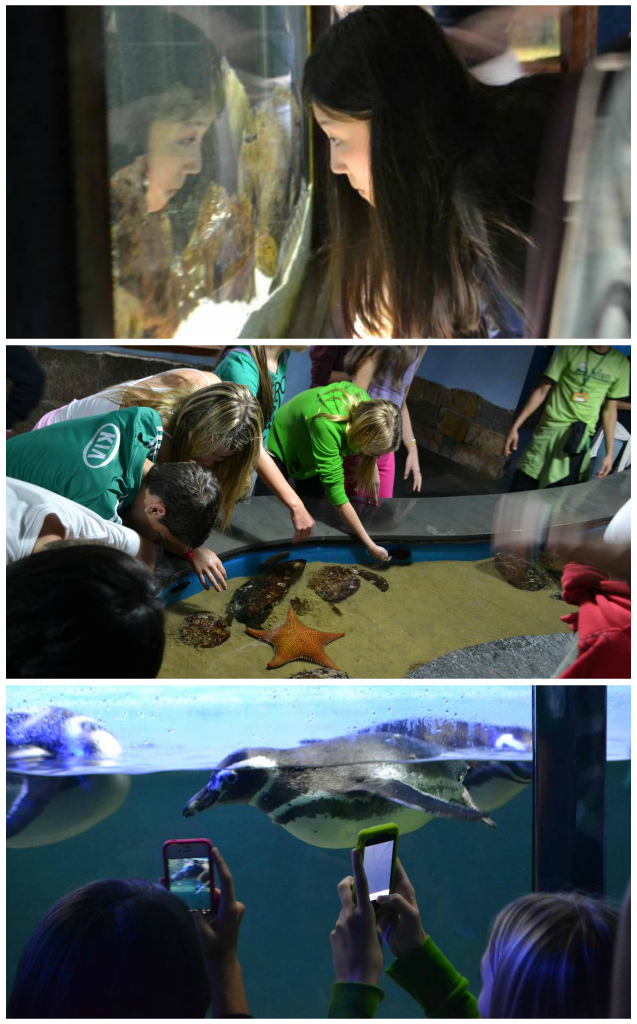
First up was a stop at Ubatuba's aquarium. Modest in size but of good quality, the aquarium showcased the diversity in marine life in and around Brazil. Also, there were penguins, which are not endemic, however, who is going to complain about seeing penguins?!?
The marine area around Ubatuba lays claim to being the seasonable home to four out of the five sea turtles found along Brazil's coast. Thus, with good reason, the
Projeto Tamar, a research and rehabilitation center for sea turtles, in located here.
On the second day we hopped on a boat and headed across the water to one of the many islands that speckle this part of the coastline. Ilha Anchieta - now a State Park - was once a prison that is famous for a (almost) successful mass escape attempt.
(Side note: since I've been in this country, I have now visited a total of three shuttered prisons, two on islands.)
Sometime during the mid-1900's, the prisoners devised a plan to earn the guards' trust by essential being really, really well-behaved. It took two years, but they eventually got to a point where they were essentially seen as a non-threat. The prisoners, now trusted companions to the guards, waited for the day the scheduled supply boat would come to the island to turn on the guards. They killed who they needed to then went to the dock to wait, but the ship was late due to unfriendly seas, leading the prisoners to get nervous and restless, ending with what amounted to a bloody massacre amongst themselves on the beach. When the supply ship arrived, the prisoners who were left boarded and subsequently crashed/sank/overturned near the mainland, thus drowning most of those remaining.

Even though the island is only about 500m away from the mainland at its narrowest point, the guards had convinced the inmates that the waters were infested with sharks by occasionally placing shark skeletons and skulls on the beach as "proof." Due mostly to the embarrassment of the escape incident itself, along with the damage incurred from the beach riot, which also involved setting fire to many of the buildings, the prison was immediately and permanently shut down.
 |
| Listening to the history of the prison. |
Now a protected State Park, the island is a unique preserved example of a unique ecosystem, the Mata Atlântica (Altantic Tropical Forest), that once covered much of the Brazilian coast and is now mostly limited to the stretch between Rio de Janeiro and just north of the city of São Paulo. A few hours of hiking the island's trails, visiting a few beaches, snorkeling, and poking around in the tide pools, we were all exhausted and ready to head back to the boat.
 |
Island flora and fauna: flower (top), vulture tracks on the beach (middle),
and Spanish moss dangling from a tree (bottom). |
This is a beautiful area of the country - rich in nature, culture, and history. I hope to be able to return in the near future to explore more of this coast, including Ilhabela and Paraty, perhaps with a little more beach beach time and a little less chaperoning!
 |
| Looking down the dock toward the mainland from Ilha Anchieta. |